In every interaction with the front desk, there is an unsung hero that helps balance hospitality, operations, staffing, revenue and the rest, all day long: hotel management software. What started as back-office reservation management has become the operational heart of almost every hotel interaction. Operations have become guest-centric, and so has management software.
Here are the five best hotel management software solutions, and you can explore our detailed guide for a breakdown of the 13 top vendors and guidance on choosing the right one for your property.
Best Hotel Management Software
G2 Rating
Key Features
Canary Technologies
4.8
Mobile Check-In/Checkout, Digital Authorizations and Tipping
AI-powered Guest Messaging and Dynamic Upsells
Deep PMS integrations (Oracle, Mews, Cloudbeds and more)
Boosts revenue, reduces fraud and streamlines guest experiences
Mews
4.8
Integrated payments
App marketplace with 300+ integrations
Open API
eZee Absolute
4.8
Built-in channel manager and booking engine
Housekeeping, front office and POS modules
Mobile app for remote hotel management
HotelBee
4.6
All-in-one PMS with front desk, housekeeping and POS
Channel manager and booking engine integrations
Billing, invoicing and guest communication automation
Revinate
4.6
Unified guest profiles with CRM capabilities
Email marketing and campaign performance tracking
Survey, feedback and reputation management tools
13 Top Hotel Software Systems
The best hotel management software makes running your hotel easier: it simplifies daily operations, boosts revenue and brings that smile to guests’ faces that fuels their experience (and reviews) while saving your team valuable time. Still, there are so many tools on the market that it's hard to pick the right one. Some are built for lean boutique properties, while others are made to scale across international hotel groups. Plus, what works for one hotel might fall short for another.
The market is likely to get more crowded, as it is projected to grow from USD 4.8 to 8.1 billion by 2032. In the meantime, here's a list of 13 of the best hotel software platforms to help you make an informed choice. Each offers a unique blend of features, pros and cons. Whatever challenge you're looking to solve, there's a tool here built to meet your needs.
1. Canary Technologies
Canary's Guest Management System delivers an award-winning hotel guest management platform that modernizes operations. With solutions for mobile check-in and checkout, AI-powered messaging, upsell offers, digital tipping and transaction security, Canary is trusted by thousands of properties globally to streamline guest touchpoints.
Its focus on hospitality AI and automation to create hotel-specific solutions also sets it apart. Canary's AI solutions are purpose-built for the industry to reduce manual workload, so staff can focus on higher-value, real guest interactions. Hotels using Canary report a 350% increase in 4-5 star reviews, a 40% decrease in front desk work, a 200% boost in upsell revenue and a 90% reduction in chargebacks and fraud.
Best for:
Pro of Canary
Cons of Canary
AI-powered guest communication across voice, webchat and messaging
Mobile-first guest journey from check-in through checkout
Built specifically for hospitality workflows and smaller hotel teams
Requires an existing PMS
2. Mews
Mews is a cloud-native property management system (PMS) that’s popular for its modern approach to operating systems. It offers tools for reservations, payments and revenue management, as well as a marketplace that connects with third-party applications. Mews is particularly useful for boutique and lifestyle properties looking for flexibility and innovation.
Despite its strengths, Mews can feel overwhelming at first due to its extensive marketplace and options. It may not be the right choice if you manage a property with simpler needs.
Best for:
Mews Pros
Cons of Mews
Cloud-native with automation-first design
Large integration marketplace (300+ partners)
Learning curve due to the breadth of features
Best value realized with integrations
3. eZee Absolute
eZee Absolute is a cloud-based PMS that gives small to mid-sized hotels an operational backbone on a single platform. Designed for independent hotels and small chains, eZee Absolute combines reservations, front desk management, housekeeping, billing and reporting. An integrated channel manager and booking engine to manage OTA and direct bookings round out its offer.
One of eZee Absolute's draws is its all-in-one nature. However, some users find that the interface feels less modern than newer cloud competitors. Advanced reporting is limited compared with enterprise solutions.
Best for:
eZee Absolute Pros:
Cons of eZee Absolute:
Unified PMS, booking engine and channel manager
Real-time updates and remote access
Its user interface may feel dated to some users
Reporting depth is not as advanced as larger enterprise systems
4. HotelBee
HotelBee is a cloud-based hotel management platform that centralizes essential hotel operations in one dashboard. It includes a built-in booking engine and channel manager to keep rates and availability in sync across every platform.
The all-in-one approach improves real-time visibility for hotel managers and enhances the guest experience. However, some users note that the interface and design could be more refined to match the sophistication of more premium platforms.
Best for:
HotelBee Pros:
Cons of HotelBee:
Cloud-based all-in-one platform for reservations, POS and billing
Channel manager and booking engine included
UI and design feel dated or unpolished
Smaller user base with limited verified reviews
5. Revinate
Revinate is designed to help you build better relationships with guests. It consolidates guest interactions and preferences across bookings, stays and post-stay feedback into one place. Use this tool to deliver targeted messages that drive direct bookings and loyalty with powerful email marketing tools and segmentation. Additionally, Revinate's reputation management features help you monitor and respond to reviews across channels.
The solution’s strength lies in its ability to turn guest data into actionable campaigns and measurable outcomes, but it isn't a full property management solution. You'll need to pair it with a PMS for daily operations.
Best for:
Revinate Pros:
Cons of Revinate:
Centralized guest CRM with rich profiles
Strong email marketing and segmentation
Not designed to replace a core PMS
Some advanced features may require additional training
6. SkyTouch Technology
SkyTouch Technology provides a cloud-native PMS designed for scalability and flexibility. Its PMS is based on a web-based interface and built to include integrations that connect hotels with channel managers, revenue management solutions and guest engagement platforms. This openness makes it a solid fit for properties that want to build a tech stack without vendor lock-in.
While SkyTouch delivers solid core PMS functionality, it's more of a foundational platform than a fully featured ecosystem. Some features, like in-depth revenue tools or advanced guest engagement modules, may require third-party add-ons.
Best for:
SkyTouch Technology Pros:
Cons of SkyTouch Technology:
Cloud-native PMS with web-based access from any device
Scalable to multi-property portfolios
May need add-ons for advanced revenue/engagement tools
Less "out-of-the-box" feature richness than some competitors
7. StayNTouch Cloud PMS
StayNTouch Cloud PMS is a cloud-native PMS that lets you manage operations from anywhere via web and mobile devices on a single platform. Many properties appreciate that it reduces training time and speeds up routine tasks, such as guest check-ins and payments.
Beyond basic PMS functionality, StayNTouch offers mobile check-in/out and integrations with kiosks and third-party systems. It works for single hotels or large portfolios, though some users feel the reporting tools could be more advanced.
Best for:
StayNTouch Cloud PMS Pros:
Cons of StayNTouch Cloud PMS:
Cloud-based and mobile-friendly
Supports multi-property and group functions
Reporting features may lack depth
Limited built-in F&B or conference/event tools in the base offering
8. RMS
RMS is a cloud hotel management platform that blends core operations with revenue-focused tools. In addition to classic PMS features, it offers dynamic pricing and forecasting capabilities. Its centralized control drives multi-property visibility from a single system.
Some users find the interface less intuitive than newer cloud-native platforms and note that reporting can feel complex without training.
Best for:
RMS Pros:
Cons of RMS:
Dynamic pricing and forecasting tools
Revenue-focused features
Can be less intuitive for new users
Reporting and setup may require training
9. RoomRaccoon
RoomRaccoon is an intuitive all-in-one platform that combines property management, channel management and a booking engine within a single dashboard. Designed with small hotels and B&Bs in mind, it simplifies reservation workflows, automates rate distribution and helps properties capture direct bookings. The idea is to reduce the need for multiple vendors, saving smaller properties time and money.
Though this tool packs many essentials into a single platform, its revenue optimization and highly customized workflows aren't as deep as those in premium enterprise systems.
Best for:
RoomRaccoon Pros:
Cons of RoomRaccoon:
Unified PMS, channel manager and booking engine
Clean, user-friendly interface
Limited advanced revenue optimization features
Not ideal for large enterprise portfolios
10. Cloudbeds
Cloudbeds combines a PMS, channel manager and booking engine. Known for its clean design and ease of use, it helps streamline operations and grow revenue without juggling multiple vendors. Cloudbeds also supports payment processing, automated billing and guest communication tools, making it a strong multi-purpose solution for independent hotels, hostels and small chains.
Cloudbeds sometimes falls short on highly specialized enterprise features that may require partner integrations.
Best for:
Cloudbeds Pros
Cons of Cloudbeds
Unified PMS, channel manager and booking engine
Easy to use with a modern interface
Advanced enterprise features often require add-ons
Some users prefer deeper revenue analytics tools
11. Hotelogix
Hotelogix is a cloud PMS designed for small to mid-sized hotels. On top of classic PMS functions, its channel manager keeps availability and rates up to date across online travel agencies. Because Hotelogix is cloud-hosted, it's accessible from any device with internet, making it easier for teams to stay connected.
The solution sometimes falls short on advanced features like revenue management or built-in marketing tools.
Best for:
Hotelogix Pros:
Cons of Hotelogix:
Cloud-native and easy to access remotely
Real-time OTA rate/inventory updates
Requires integrations for advanced features
Not as deep in revenue management or guest engagement natively
12. Oracle OPERA Cloud PMS
Oracle OPERA Cloud PMS is a property management solution used by major hotel brands and large portfolios. It offers comprehensive tools covering reservations, front desk operations, housekeeping, group and event management and deep reporting and analytics. Built on its global cloud infrastructure, the solution is reliable and scalable with powerful workflow automation.
Because it's designed for enterprise environments, Oracle OPERA can be more complex and costly than other options and involves a complex setup process. Its depth of functionality is unmatched for large brands, but smaller properties may find it more than they need.
Best for:
Oracle OPERA Cloud PMS Pros:
Cons of Oracle OPERA Cloud PMS:
Enterprise-grade with deep operations and analytics
Scales across brands and global portfolios
Higher cost and complexity
Requires expert implementation and training
13. Cendyn
Rather than acting as a traditional PMS, Cendyn helps hotels understand and act on guest data through a Customer Data Platform (CDP). This lets teams create personalized marketing campaigns, segment guests based on behavior and nurture relationships and loyalty. The platform integrates with major PMS and distribution systems, bringing rich guest insights into your existing tech stack.
While Cendyn shines in marketing automation and guest data intelligence, it's not a full hotel operations system on its own. Properties looking primarily for front desk or housekeeping tools will still need a dedicated PMS.
Best for:
Cendyn Pros:
Cons of Cendyn:
Deep guest data unification and segmentation via CDP
Automated multi-channel marketing campaigns
Not a standalone PMS for operations
Can be difficult to use without dedicated marketing resources
What Features Should I Look for in Hotel Management Software?
Managing reservations and assigning rooms is standard in any hotel management software. But using guest profiling to target the right in-house guests with a message about tonight’s salsa dancing class? That’s a feature.
A high-touch luxury resort with an expansive spa and multiple pool bars needs different features than an airport hotel with a restaurant. Below is a breakdown of the core hotel management software features every hotelier should evaluate, how each capability works and its direct operational impact.
Important Features of Hotel Management Software
How It Works
How It Impacts Your Property
Property Management System
Serves as the central operational hub and source of truth for reservations, room inventory, guest folios, billing and more.
Powers front desk operations and provides central visibility into room availability and daily operations, now, historically, and into the future.
Channel Manager and Booking Engine
Synchronizes room availability and rates across OTAs and third parties.
Eliminates double- or overbookings, allows central management of multiple channels and expands global reach.
Contactless Check-In and Check-Out
Allows guests to complete pre-arrival registration, verify identity, make payments and access keyless room entry or digital checkout from their mobile devices.
Reduces front desk wait times and improves guest satisfaction.
Housekeeping and Task Automation
Updates room status in real time and routes maintenance requests.
Speeds up room turnover and streamlines team communication.
AI Engagement
Uses AI-powered messaging to instantly answer guest inquiries, send pre-arrival/post-stay text notifications and surface dynamic upsells.
Offloads routine guest questions from staff, boosts ancillary revenue and drives positive guest reviews.
Reporting and Revenue Analytics
Aggregates operational and financial data to track key metrics.
Empowers managers to make data-driven decisions and forecast accurately.
How Do I Evaluate Hotel Management Software?
With dozens of hotel software options available, it's easy to feel overwhelmed. But choosing the right solution doesn't have to be complicated. The key is to define your property's unique needs, existing systems and future goals, then narrow your options accordingly.
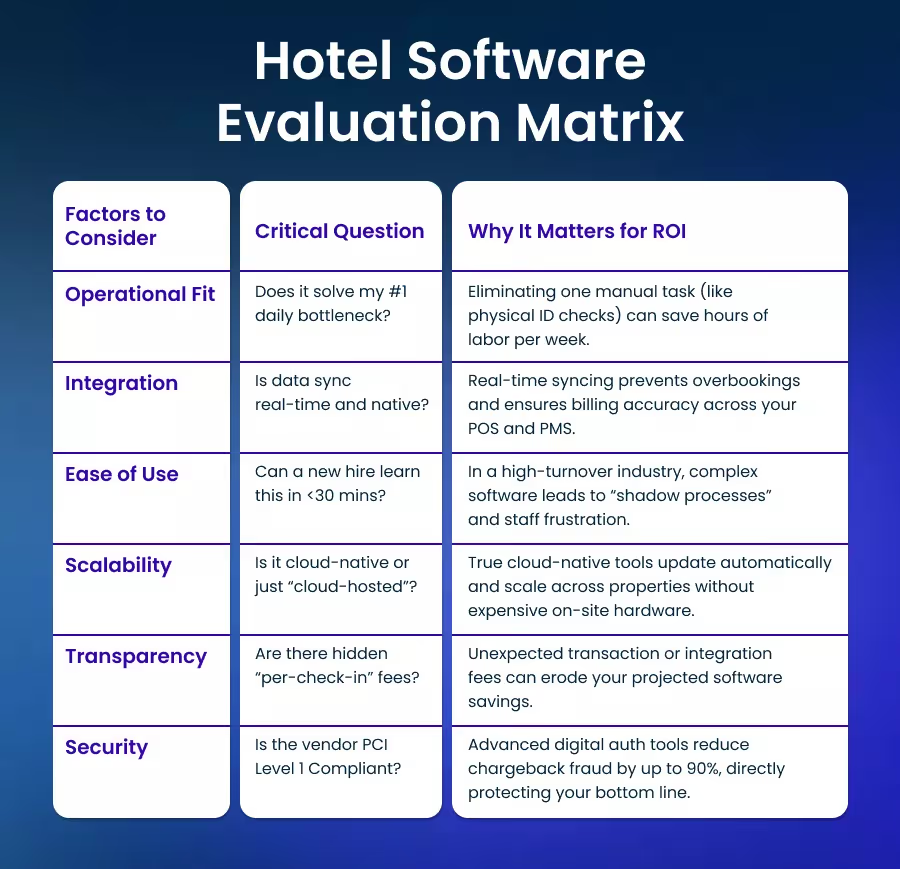
Use this hotel software evaluation matrix as a quick framework to compare platforms and narrow your options.
Let’s take a more detailed look at how top hotels choose management systems.
Determine Operational Fit
Pinpointing your daily challenges is the first step in choosing the right tool. What's holding your team back? Do you struggle with long check-in lines, manual housekeeping assignments or have limited visibility into guest preferences? Every hotel runs differently, so your choice should align with your specific hotel operations priorities instead of a generic checklist.
Create a short list of goals you want your hotel management software to support. These might include reducing front desk workload, increasing upsell revenue or centralizing guest communication. Once you know the features you want, you can filter out tools that don't deliver those outcomes.
You should consider:
Where do manual processes slow your team down?
Are you looking to grow revenue, save time or both?
What are your current guest experience pain points?
Ensure Integration with Existing Hotel Systems
Your hotel management software should work with your existing tech stack, not against it. Look for tools that integrate seamlessly with your PMS, channel manager, POS and other current systems. The fewer systems your team has to update manually, the more efficient your workflows become. Smooth integrations also reduce training time and the risk of human error.
During vendor demos, ask how data flows between platforms and whether integrations are native or require third-party connectors. If you're using tools like revenue management systems or digital tipping, make sure they're compatible or that future integrations are on the roadmap.
Answer these questions:
Does the software integrate with your current PMS and OTA tools?
Are integrations included in your plan or priced separately?
Is real-time data syncing available?
Review Ease of Use and Staff Training Requirements
If nobody on your team uses it, then it won't matter how technologically advanced the system is. That's why usability matters as much as functionality. Choose a platform with an intuitive layout that mirrors how your staff works. Clean design, logical menus and mobile responsiveness can all shorten the learning curve. And for properties with high turnover, a streamlined hotel staff training process is essential.
Don't forget to ask about onboarding and support resources. Some vendors offer built-in training modules or multilingual help centers that can save your team time, while others require more hand-holding. Either way, a system that's easy to learn will lead to faster adoption and fewer day-to-day frustrations. Here's what to consider:
How quickly can new team members learn the platform?
Is onboarding included in the setup process?
Are there mobile tools or multilingual support?
Assess Scalability and Cloud-Based Capabilities
Your hotel's tech stack should grow with you as you add new room types, amenities or locations. Legacy, on-premise platforms often bind properties to clunky hardware and costly manual upgrades. Modern cloud-native systems, by contrast, offer the flexibility to scale portfolio capacity up or down without heavy infrastructure investments or disruptive software updates.
Choosing a cloud-based platform also gives your management team real-time visibility into property performance from anywhere. When evaluating systems for long-term growth, pay close attention to multi-property management features, security standards and platform uptime guarantees.
Consider the following:
Can the software easily manage multiple properties or portfolio expansions?
Is the system fully cloud-based with reliable data backups and strong security protocols?
What are the additional costs or tier upgrades associated with adding rooms, users or locations?
Verify Pricing Transparency and Vendor Reliability
Once you've narrowed down your shortlist, take a close look at cost and the vendor's reliability. Does the provider offer transparent pricing or will you be hit with add-on fees later? Look for vendors that provide 24/7 support, reliable training and a strong track record with properties like yours. These details matter just as much as features.
Reputation also plays a big role. Read case studies, check G2 or HotelTechReport reviews and ask for references from similar hotels. Great software is only valuable if it comes with dependable service. A vendor who listens, adapts and consistently delivers updates is worth the investment. Make sure you:
Look for verified reviews and customer testimonials
Confirm Security and Compliance Controls
Hotels handle sensitive guest data daily, making robust security non-negotiable. A single data breach can result in severe financial penalties, operational downtime and lasting damage to your brand’s reputation. Prioritize vendors that maintain strict industry compliance standards—such as PCI DSS for payment processing, SOC 2 for overall system security and GDPR for guest data privacy—to protect both your property and your guests.
Before committing to a vendor, clarify their data protection practices and user access controls by asking these key questions:
Is the platform fully PCI DSS compliant for processing credit card details and tokenizing payment information?
What data encryption, SOC 2 certifications or regional privacy standards does the vendor adhere to?
Does the software offer granular role-based permissions and multi-factor authentication to prevent unauthorized access?
Benefits of Adopting Hotel Technology Software
The right hotel technology software drives real results, helping your team operate more efficiently while delivering service that stands out. It also gives leadership the visibility and insights needed to make smarter, faster decisions.
By investing in a platform that aligns with your property's needs, you'll unlock new opportunities to grow revenue, enhance team collaboration and strengthen compliance. Here's what the right software brings to the table.
1. Streamlined Operations and Reduced Manual Work
A strong hotel management system automates time-consuming tasks like room assignment, housekeeping updates and guest messaging, saving your team hours each day. Instead of juggling spreadsheets or re-entering data across systems, your staff can focus on the guests in front of them. With smart hotel automation, workflows become more efficient and less error-prone.
Automation also creates consistency. Whether it's scheduling, invoicing or check-in, the right platform ensures tasks get done the same way every time without relying on sticky notes or manual reminders. Some operational gains include:
Fewer errors from manual data entry
Faster room turnover with automated housekeeping updates
Real-time task tracking for all departments
Less time spent switching between systems
2. Improved Guest Experience and Personalization
Today's guests expect digital convenience and tailored experiences and the best software delivers on both. In fact, according to Hospitality Technology, 71% of hotel operators agree that guests see guest-facing technologies as empowering.
From mobile check-in to personalized upsell offers, modern tools make it easier to anticipate guest needs and respond quickly. With rich guest profiles and behavior tracking, you can offer a fantastic guest experience that feels less transactional and more thoughtful.
When tech removes friction from the guest journey, it also gives your team more time to deliver standout service. The result: happier guests, better reviews and increased loyalty. A few personalization benefits include:
Seamless mobile check-in and checkout
Tailored room upgrades and amenity offers
Faster response times through automated messaging
Centralized guest history and preferences
3. Enhanced Revenue Management and Reporting
Good software makes you more money. Dynamic pricing tools, upsell automation and real-time analytics help properties optimize every opportunity. Many platforms include built-in hotel revenue management features or integrate with specialized RMS tools to forecast demand and adjust rates accordingly.
Detailed reporting dashboards also help GMs and owners make smarter decisions based on occupancy, ADR, RevPAR and upsell performance. No more waiting on end-of-month reports or digging through spreadsheets. Some revenue-driving tools may include:
Dynamic pricing and automated rate adjustments
Upsell offers delivered at key touchpoints
Real-time revenue reporting by channel or segment
Insights to support budgeting and staffing decisions
4. Stronger Security and Compliance Controls
Hospitality is a high-risk environment for data privacy and payments. The best hotel management software comes with built-in hotel security tools, such as PCI-compliant payment systems, digital contract workflows and guest data encryption. This reduces your exposure to fraud.
Automated systems also improve audit trails and enforce internal controls critical for chains or properties with complex financial processes. Digital authorizations and mobile tipping, for instance, protect staff and guests alike. Look for these features:
PCI-compliant payment processing
Role-based access controls and audit logs
Digital authorizations and ID verification
Data encryption and secure guest messaging
5. Better Team Collaboration and Communication
When everyone works from the same system, service and communication flow. A strong hotel platform supports real-time updates across departments so housekeeping knows when a room is ready, the front desk sees guest preferences and managers can check performance metrics instantly.
Many solutions also include internal messaging tools or staff task management, which help teams stay connected and accountable, especially in larger properties or resorts. Some collaboration-enhancing features may include:
Shared task lists and real-time status updates
Mobile access for on-the-go coordination
Integrated messaging between departments
Central dashboards for manager visibility
Why Canary Is One of the Top Hospitality Software Companies
Canary Technologies stands out as a leading choice for modern hotel management because we’ve built our platform with one goal in mind: to streamline hospitality operations while elevating the guest experience. Rather than bundling outdated tools into one clunky platform, we offer a mobile-first, modular system that's easy to implement, simple for staff to use and designed to drive real business results.
Trusted by more than 20,000 customers in 100+ countries — including brands like Marriott, Four Seasons, Choice Hotels and Ace Hotel Group — we digitize every guest touchpoint while reducing staff workload and improving efficiency across departments. We were also named the #1-rated guest experience system at the 2026 HotelTechAwards, with key solutions including:
Mobile Check-In and Smart Checkout to eliminate front desk lines and reduce fraud
AI Guest Messaging for instant responses to guest needs with automation and personalization
Dynamic Upsells, which increase ancillary revenue with targeted in-stay offers
Tablet Registration that speeds up group and on-site check-ins with digital workflows
Digital Tipping for improved staff morale and higher service scores
Whether you're managing a boutique hotel or a multi-property group, our platform gives you the flexibility to scale and the confidence to operate smarter. Book a demo today to see why Canary is the best hotel management software.
Frequently Asked Questions
What Is Hotel Management Software?
Hotel Management Software manages guest data and operational processes in the background so you don’t have to—like assigning an available standard room without you checking which standard rooms are empty and cleaned first. It simplifies daily operations, boosts revenue and saves staff valuable time. The latest features include guest-centric tools such as guest messaging and mobile check-in.
What Is the Best Hotel Management Software?
The best hotel management software is one that aligns with your property's operational needs, enhances the guest experience and scales with your business. Look for a platform that offers essential tools like mobile check-in, guest messaging and upsell automation in an intuitive, cloud-based system. Seamless integrations with your PMS, payment processors and OTAs are also non-negotiable.
Canary Technologies consistently ranks as a top choice because it delivers across the board and is built to drive measurable results, from reducing fraud to boosting revenue while streamlining tasks.
Which Hotel Management Software Is Used in 5-Star Hotels?
Five-star hotels typically use enterprise-grade software that delivers operational efficiency and high-touch guest service features. These properties often require advanced capabilities like multi-property management, AI-powered personalization and tight integration across departments. The software must also support brand standards and global compliance requirements.
Luxury hotels increasingly use solutions like Canary Technologies because they offer this level of sophistication while remaining easy to implement and use. With clients including Four Seasons and Marriott International, Canary gives five-star properties the tools to deliver seamless service, elevate personalization and operate at scale without sacrificing quality.
What Types of Hotels Benefit from Using Software for Hotel Management?
Hotel management software benefits all types of properties regardless of their size, service level or location. It's especially valuable for properties looking to reduce manual tasks, boost upsell revenue and centralize their tech stack.
Modern platforms like Canary are built to be modular and scalable, so both small and large properties only need to adopt what they need. Whether you're managing a 20-room boutique or a 500-room luxury resort, hotel management software transforms your workflows and delivers real ROI.
How Much Does Hotel Management Software Cost?
The cost of hotel management software varies depending on your property’s size, selected modules and tech stack complexity. Most modern platforms operate on a Software-as-a-Service (SaaS) subscription model, typically charging either a fixed monthly fee per room or a flat monthly package rate.
What Is the Difference Between a Hotel PMS and Management Software?
A Property Management System (PMS) is the foundational administrative database of a hotel, handling core operational functions like room inventory, reservation calendars, night audits, guest folios, and billing. "Hotel management software," on the other hand, is an overarching umbrella term that includes the PMS alongside complementary specialized software—such as channel managers, revenue management systems, CRM platforms and guest engagement tools like Canary Technologies. In short, while every PMS is a form of hotel management software, not all hotel management tools are built to function as a core PMS.
Is Cloud-Based Management Software for Hotels Better than On-Premise?
Cloud-based hotel software eliminates the need for expensive on-site servers, manual software updates and heavy IT maintenance, making it very attractive to modern properties. They offer secure, real-time data access from any device, enabling staff to manage operations from any device. As properties grow, cloud-based solutions are easy to scale.





.avif)


.avif)